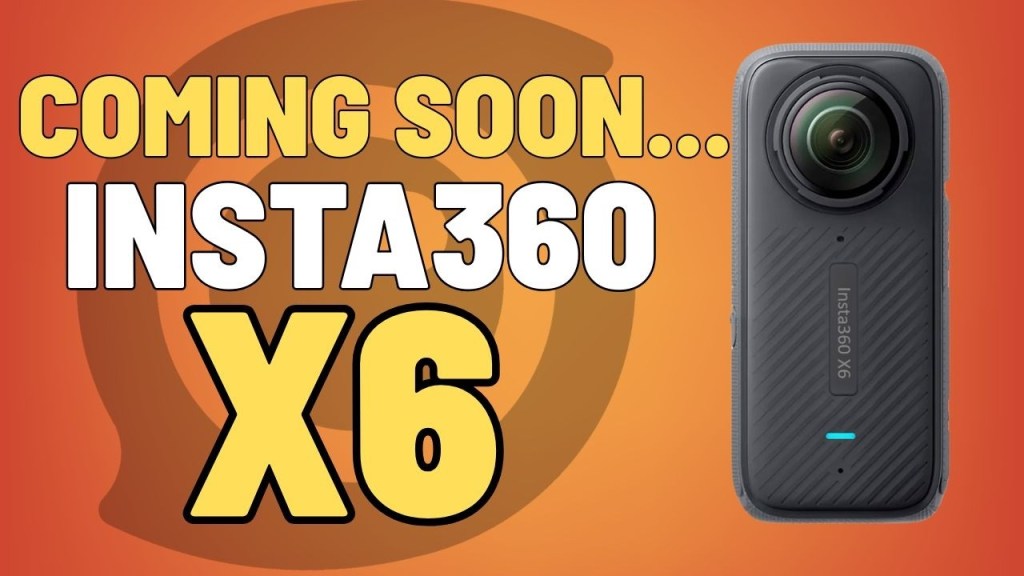
We are almost four months into 2026, and it is starting to feel like Insta360 is overdue for a major release. The insta360 x6 release date question has been hanging in the air, and now people are sharing what appear to be regulatory filings for the Insta360 X6, the company’s next flagship 360 camera.
Those filings are a strong sign that a launch is coming soon. The bigger question is timing: is it this week, this month, or later in the quarter?
Why the insta360 x6 release date might be “soon,” not “eventually”
The best clue is pattern. Looking at the past couple years of Insta360 X series releases, the X4 landed in April 2024, and the X5 arrived in April of the following year. If that rhythm holds, the X6 could be due in a matter of weeks.
So when regulatory filings show up, it is not just random speculation. Filings typically happen close to product readiness. That makes the odds higher that we are heading toward an announcement rather than waiting indefinitely.
Insta360’s 2026 roadmap: why faster releases are likely
There is another reason to think the X6 could be coming quickly. The CEO has outlined ambitious plans for 2026, including 7 to 8 new products.
If Insta360 wants to hit a number like that, the big releases cannot be spaced too far apart. Leaks and rumors also point to at least two completely new products, including one positioned as a direct competitor to DJI’s Pocket series. That kind of expansion puts pressure on the release calendar, and it makes the X6 timing feel more urgent.
Release window: this month feels plausible
Putting the two signals together, the situation looks like this:
- Regulatory filings suggest hardware is moving toward market readiness.
- April release pattern from X4 and X5 suggests timing in the same neighborhood.
- Company goals for 7 to 8 products in 2026 suggest major announcements need to start landing sooner.
All of that makes it very likely the X6 is headed toward an announcement this month. A teaser could also surface before the full launch, and that would fit the typical marketing ramp-up.
What upgrades could show up in the Insta360 X6?
Now for the fun part: features. The core idea is that Insta360 will likely focus on performance upgrades that matter for everyday creators, while also keeping pace with rivals like DJI and GoPro.
1) Higher frame rates in multiple resolutions
The biggest technical expectation is frame rate. The current maximum in 8K is 30 frames per second, and the prediction here is that Insta360 could double that.
What that might look like:
- 8K: possibly going from 30 fps to 60 fps
- 5.7K plus: possibly increasing to 60 fps
- 5.7K: potentially pushing as high as 120 fps
Higher frame rate is not just a spec sheet flex. It makes a big difference when you want smoother motion, cleaner slow motion, or better action footage.
And there’s a tradeoff that impacts everything else.
2) Battery upgrade to handle the higher performance
Increased frame rates draw more power. If the X6 truly moves to higher fps modes, it needs to keep users from constantly hunting for battery swaps.
Here is the battery context: the X5 shipped with a 2400 mAh battery. Insta360 later introduced an upgraded “Ultra” battery at 2800 mAh.
It is possible that the X6 standard battery could adopt that higher capacity, meaning the “Ultra” battery becomes the default or at least the baseline upgrade path.
3) 10-bit color to compete with DJI and GoPro
Two competitors have a feature the X5 does not: 10-bit color.
In practical terms, the X5 uses 8-bit color, which corresponds to about 16.7 million colors. With 10-bit color, you are dealing with over a billion colors.
That gap matters most for people who like to color grade or push footage during editing. Even if many creators do not do heavy grading, matching color depth expectations is important if Insta360 wants to feel competitive with DJI and GoPro.
4) More serious low light performance through an improved Pure Video mode
The X5’s low light strength has a lot to do with a mode called Pure Video.
In Pure Video mode, the camera boosts brightness, reduces noise, and pulls more detail out of the shadows. It is a real processing advantage, not just a marketing label.
DJI has its own “Supernight” style feature, and the assessment here is that Pure Video is even better in overall quality.
So another likely X6 upgrade would be an enhancement to Pure Video. The reasoning is simple: if Insta360 wants to stay ahead, improving low light is an easy win that shows up instantly in footage.
The “highly likely” upgrade bucket
Based on all of that, the upgrades that seem most plausible fall into one list:
- Higher frame rates (8K up to 60 fps, 5.7K modes up to 60 fps and possibly 120 fps)
- Battery upgrade (potentially aligning standard capacity with the X5 Ultra battery)
- 10-bit color for stronger grading headroom
- Pure Video improvements to push low light performance even further
Upgrades to hope for, even if they are not fully guaranteed
It is also worth separating “likely” from “I really want this.” These are the changes that would make the X6 feel like a clear step forward, but there is less certainty.
A bigger sensor than the X5
The X5 uses a 1/1.28-inch sensor. A 1-inch sensor would be a major upgrade, and the reason is straightforward: bigger sensors generally give you better image quality, especially in challenging lighting.
The X5 also uses a triple chip approach, with two pro imaging chips and an AI chip doing image processing. Even with a strong AI pipeline, a larger sensor could push the baseline image quality higher.
Built-in storage (at least 128 GB)
One convenience feature that would be genuinely helpful is built-in storage. The request is not for massive capacity. 128 GB would be enough for an all day shooting pattern if the use case involves short clips.
It also serves as a safety net if you forget your micro SD card or cannot afford a 1 TB card.
Keep accessory compatibility with the X5
I love new features, but it is frustrating when batteries and accessories become obsolete. One hope for the X6 is that it keeps the same overall size and maintains compatibility with X5 gear.
In other words: if the body form factor stays similar, the ecosystem stays useful.
A small connection design improvement like the Osmo 360
There is one specific feature that would be nice to see, but it is not necessary. DJI’s Osmo 360 has connection points at the bottom that let you charge and control it without relying on a USBC cable setup.
The benefit is a cleaner workflow, avoiding a mess of connections running from a charging handle to the camera.
What to watch for next
If the filings point to a launch cycle and the past April pattern continues, then it makes sense to keep an eye out for:
- Teasers for the X6 in the near term
- More confirmation around sensor and storage options
- Detailed specs on frame rate limits and color depth
- Battery capacity and whether Ultra-level capacity becomes standard
The insta360 x6 release date story is no longer purely guesswork. The filing activity suggests the product is real and close. Now the waiting game is about how quickly Insta360 flips the switch from regulatory paperwork to an announcement you can actually buy.
FAQ
What is the most likely insta360 x6 release date based on past patterns?
Based on the X4 release in April 2024 and the X5 release in April of the following year, the X6 could be announced in a similar timeframe, potentially within the next few weeks.
Do regulatory filings guarantee the Insta360 X6 is coming?
They are a strong indicator the product is moving toward release readiness. While they do not confirm an exact day, they typically align with hardware that is close to market.
What frame rate upgrades are expected for the X6?
The expectation is higher frame rates such as 8K up to 60 fps, 5.7K plus up to 60 fps, and possibly 5.7K up to 120 fps.
Why would Insta360 likely upgrade the battery if frame rates increase?
Higher frame rates draw more power. The X5’s standard battery was 2400 mAh, and the upgraded Ultra battery is 2800 mAh, so the X6 could adopt higher capacity to maintain usable runtime.
Will the X6 likely get 10-bit color?
It is considered highly likely. The X5 uses 8-bit color, and DJI Osmo 360 and GoPro Max 2 offer 10-bit, which is important for color grading.
What is Pure Video, and how might it improve?
Pure Video is a low light mode that increases brightness, reduces noise, and reveals shadow detail. An X6 improvement is expected to further strengthen performance versus DJI’s Supernight-style processing.
What are some upgrades people hope for but are less certain?
A bigger sensor (for example moving toward a 1-inch sensor), built-in storage such as 128 GB, compatibility with X5 batteries and accessories, and minor connection design improvements are all hopes, but not guaranteed.
 A.V. with Rodney
Leave a comment